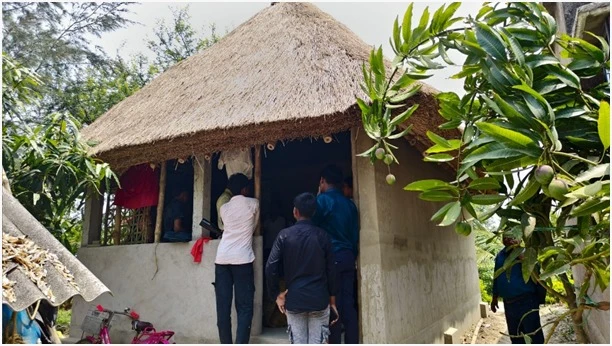
Mukti Gram Exposure Visit Inspires Learning on Climate-Resilient Development
On 24th May 2026, an exposure visit to Mukti Gram at Purba Sreedharpur was organized for 27 participants, including members of Climate Clubs, adolescent groups, and field staff. The visit was designed to provide hands-on learning opportunities on climate-resilient development practices and to demonstrate how local communities can actively contribute to environmental conservation while improving their livelihoods.
Mukti Gram serves as a model of sustainable rural development, where environmental protection, disaster preparedness, and livelihood generation are closely linked. Through the exposure visit, participants were able to observe several community-led initiatives that are helping local residents adapt to the growing challenges of climate change in the Sundarbans.
During the visit, participants learned about the importance of mangrove plantations in protecting coastal communities from cyclones, tidal surges, and soil erosion. They also explored climate-resilient agricultural practices that help farmers continue cultivation despite changing weather patterns and increasing environmental risks. The visit included demonstrations on organic nursery development, sustainable crab farming, and eco-friendly housing structures built using locally available materials such as bamboo and thatch.
A major attraction of the visit was the fruit garden, where participants observed the cultivation of guava, mango, wax apple, lemon, and dragon fruit. Discussions highlighted how diversified fruit cultivation can improve household nutrition while creating additional income opportunities for rural families. Participants showed keen interest in learning how such models could be replicated in their own villages.
Interactive sessions were conducted by community resource persons who shared practical experiences on environmental conservation, climate adaptation, and sustainable livelihood practices. The discussions emphasized the importance of reducing dependency on chemical fertilizers, promoting organic farming methods, and encouraging greater community participation in environmental protection activities. Special attention was also given to the role of women and young people in driving positive environmental change at the grassroots level.
The exposure visit provided a valuable platform for participants to connect classroom knowledge with real-life community practices. By witnessing successful examples of sustainable development firsthand, participants gained a deeper understanding of how local actions can contribute to long-term environmental resilience and community well-being.
The programme concluded with reflections and discussions among participants, many of whom expressed their willingness to adopt similar climate-friendly practices within their own communities. The visit not only enhanced their knowledge but also inspired a greater sense of responsibility towards protecting natural resources and building a more sustainable future.
Project Activities
- A village for independent and enterprising women (A VIEW) (5)
- About Mukti (11)
- Accreditation (14)
- AGM (63)
- Agriculture Reforms (130)
- Ambulance Service (2)
- Amplifying Community Voices (77)
- Awards (17)
- Awareness and Empowerment (141)
- Awareness drives (64)
- Bio-Village-Kankandighi (10)
- Careers (10)
- Chick Rearing Programme for Marginalised Women (17)
- CHILD (25)
- Climate Resilience River Embankment (46)
- Covid-19 (74)
- Cultural Shows (7)
- Cyclone Aila (13)
- Cyclone Amphan (44)
- Cyclone Bulbul (30)
- Cyclone Dana (3)
- Cyclone Remal (12)
- Cyclone Response & Recovery (90)
- Cyclone Tolerant Houses (15)
- Cyclone Yaas (57)
- Daily Activities USA (25)
- Disaster Recovery (265)
- Editorial (73)
- Editorial by Abir Biswas (1)
- Editorial by Amit Kumar Dey (4)
- Editorial by Ananya Chatterjee (3)
- Editorial by Ankita Kothiyal (5)
- Editorial by Chandrachur Chatterjee (1)
- Editorial by Debabrata Halder (2)
- Editorial by Dr. Alokananda Ghosh Sengupta (2)
- Editorial by Kasturi Bakshi (1)
- Editorial by Monami Mitra (1)
- Editorial by Nandita (4)
- Editorial by Pampa Karmakar (1)
- Editorial by Paramita Panja (1)
- Editorial by Pranay Patra (1)
- Editorial by Prof. Pradeep Ray (1)
- Editorial by Ranitendranath Tagore (2)
- Editorial by Sankar Halder (16)
- Editorial by Satyajit Ray (11)
- Editorial by Sohini Mehta (1)
- Editorial by Sonamon Basu (3)
- Editorial by Soumitra Bose (4)
- Editorial by Subhankar Basu (1)
- Editorial by Supriya Sarkar (1)
- Editorial by Supriyo Banerjee (4)
- Editorial by Ujjwal Maity (2)
- Education and Enrichment (471)
- Environment and Resilience (132)
- Featured Activities (32)
- Gram Clinic (9)
- Health Water & Sanitation (103)
- HOPE (10)
- Impact Stories List (109)
- Integrated Development (247)
- International Management Institute (IMI) (2)
- Jal hi Kal (6)
- KF Mukti Clinic (2)
- Kitchen Gardening (16)
- Livelihood & Enablement (242)
- MCDF (122)
- Medical Camp (48)
- MIT (8)
- MKSS (62)
- MSS (161)
- Mukti Academia (5)
- Mukti Academy (2)
- Mukti BSI Digital Herberium (1)
- Mukti Craft (18)
- Mukti Cultural (2)
- Mukti Employment Exchange (MEE) (29)
- Mukti Fresh (15)
- Mukti Gram - Egra (12)
- Mukti Gram - Purbashridharpur (172)
- Mukti Green Defense in Sundarbans (12)
- Mukti URBAN (18)
- Mukti USA (2)
- Mukti Yoga (12)
- Mukto Dhara (2)
- Navya (3)
- NIRMAN (5)
- Northumbria University (2)
- Obituary (6)
- Observance Days Celebration (54)
- Organic Farming & Training Support (49)
- Pond Rejuvenation (21)
- Prerana (5)
- Projects For Mukti Wide (7)
- Queen Mary University of London (1)
- Rights and Special Needs (132)
- Run for Cause (16)
- Run4SafeFood (11)
- SDF (6)
- Shahoshini (15)
- Skill & Enterprise Development (21)
- Smart lab (5)
- Social Stock Exchange (2)
- Social Workers' Convention (1)
- Sundarbans Green (SUN-G) (15)
- Sunderban development fair project (4)
- Suraksha Songlap (3)
- Surya (29)
- Sustainable Agriculture Movement (67)
- SWAS-2-0 (23)
- Swastha Shongini (33)
- Swavalamban Accelerator in Sundarbans (SWAS) (22)
- Tour for Cause (52)
- TSS (222)
- UDAAN (9)
- Uncategorized (109)
- University of Calcutta (2)
- Value Education (13)
- Valued Partners (3)
- Vocational Trainings (15)
- VOICE (15)
- Voice Sunderban (2)