•The project is a research study exploring how community volunteering by women creates long-term pathways to social transformation.
•The study distinguishes between “liberal empowerment” (individual growth) and “liberating empowerment” (collective social change).
•It examines voluntary labour as a tool for disrupting social norms rather than just a technocratic solution for service delivery.
•A collaborative academic-practitioner effort between Northumbria University and the NGO Mukti.
Highlighting the Top Stories
Feature News
Awareness and Empowerment | 27 Jul 2023
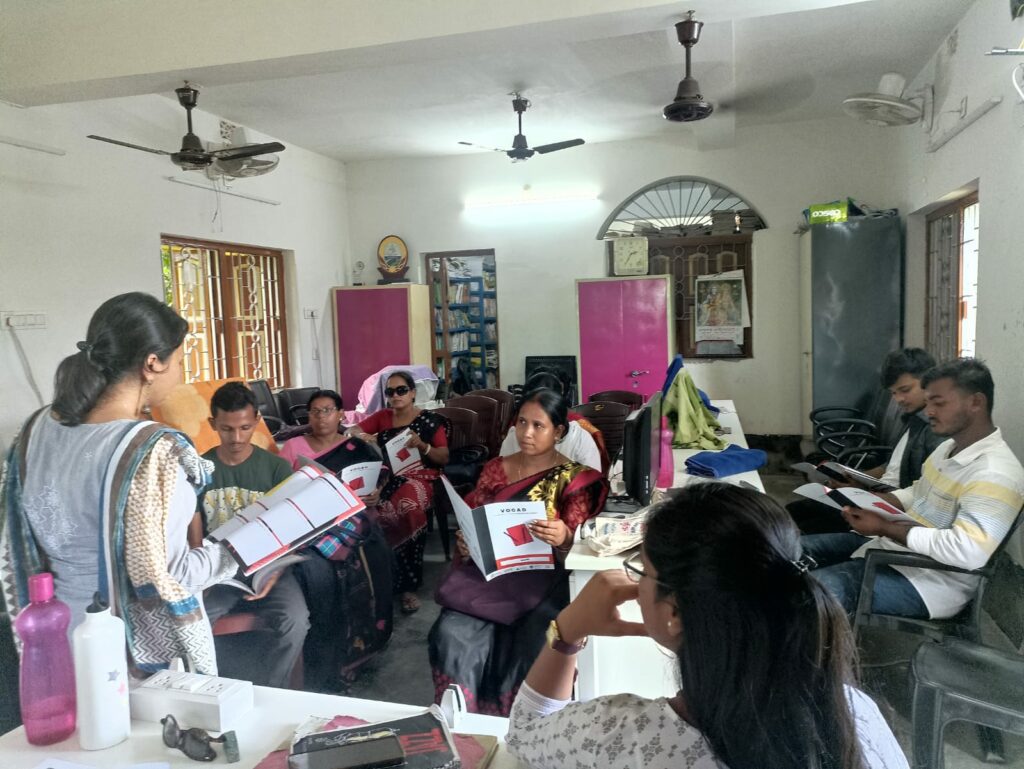
Exploring Sundarbans’ Challenges: Mukti’s Involvement in Climate Impact Research
01. Why the project is?
•Evidence of gendered vulnerabilities in the Indian Sundarbans climate hotspot, including increased risks of vector-borne diseases like malaria and dengue.
•Climate change impacts such as increased water salinity causing gynaecological complications, irregular menstruation, and pelvic inflammatory disease in women.
•Re-occurring crop failures leading to male out-migration, leaving women to head households without decision-making power or financial resources.
•Heightened risks of gender-based violence, sexual violence, and human trafficking in the aftermath of climate disasters.
•Growing pressure on women to balance household tasks with income-generating work as climate pressures reduce agricultural production.
02. What the project is?
03. How the project is?
•Research conducted through the lenses of liberal vs. liberating feminism and social disruption.
•Uses an expanded temporal lens to show how trust and solidarity are forged through resistance to social norms over time.
•Situate voluntary labour within existing inequalities rather than treating it as a neutral or “cheap” resource.
•Led by an interdisciplinary team including Janet Clark, Sumana Banerjee, Matt Baillie Smith, Nandita Jayraman, and Melisa Maida.
•Project documentation includes a 27-page research article submitted to the journal “Development in Practice”
04. Where the project is?
•Location: Indian Sundarbans region, West Bengal, India.
•Institutional Context: Geography and Environmental Sciences Department, Northumbria University (UK) in partnership with Mukti (India)
05. What the impact is?
•Reveals how voluntary labour fosters solidarities and trust, enabling women to challenge deep-seated gendered norms.
•Identifies how shorter-term individual empowerment programs can lay foundations for transformational societal change.
•De-stabilizes the preoccupation with volunteering only as disaster response, opening space to recognize its transformational potential.
•Provides pathways to social transformation by building collective identity and shared trust among women in climate-vulnerable zones.
•Translates the lived experiences of women into academic and policy frameworks to better understand the intersection of gender, climate, and labour.


Alliances that Drive Success
Partners
Contact Info:
Email : awareness@muktiweb.org
Phone : + 91-6290589664
Address
22 Canal Side Road, Barhans, Garia, Kolkata – 700 084