Building Stronger Community Facilitators Through Skill-Based Training
To strengthen grassroots leadership and community engagement, Mukti organised a Facilitation Skill Improvement Training Programme on 9 July 2026 at the Kuemuri Mukti Office. The training was facilitated by Ms. Chandni Singh Dutta and brought together community volunteers and ACV project staff for a day of interactive learning designed to enhance facilitation, communication, leadership, and active listening skills.
The training adopted a participatory and activity-based approach, enabling participants to learn through practical exercises, group discussions, and role-play rather than conventional classroom instruction. The objective was to equip community facilitators with the confidence and skills needed to effectively engage with people, encourage participation, and lead meaningful discussions within their communities.
The programme began with an engaging icebreaker activity in which participants introduced themselves by sharing their name, village, and favourite food while passing a soft ball. The exercise created a relaxed and welcoming atmosphere, helping participants overcome initial hesitation and build connections with one another.
To strengthen public speaking skills, participants were invited to deliver a one-minute speech on topics such as their family, village, or personal dreams. This activity encouraged them to express their thoughts confidently while improving their ability to communicate clearly before a group.
A message-passing exercise followed, illustrating the importance of active listening and effective communication. As the message travelled from one participant to another, everyone witnessed how information could easily become distorted if not conveyed carefully, reinforcing the need for accuracy and attentive listening during community interactions.
The participants also enjoyed a lively concentration game using the commands “Head, Shoulder, Knee, Toe, and Glass.” The activity tested their alertness and quick responses while highlighting the importance of listening carefully before taking action. Another paired exercise focused on active listening, where one participant spoke for two minutes while the other listened attentively and summarised the key points. The exercise demonstrated the value of empathy, patience, and respectful communication in building trust and meaningful dialogue.
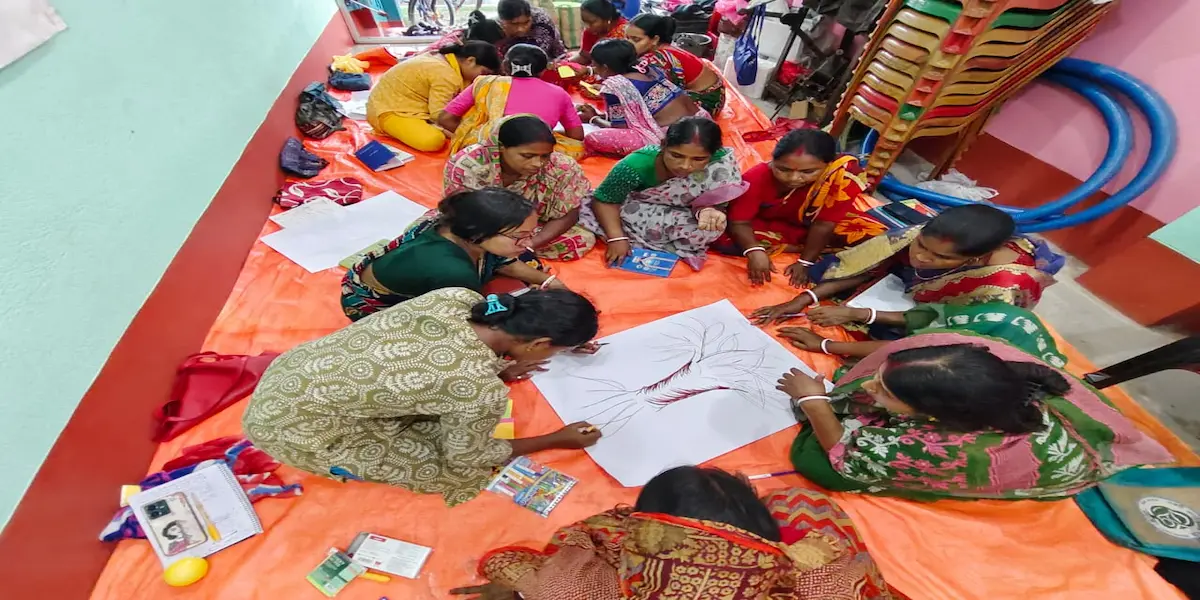
In another interactive session, participants were divided into two groups and asked to identify the qualities of both an effective and an ineffective facilitator. Using sticky notes, they created visual “tree” charts that captured the behaviours, attitudes, and skills required to successfully facilitate community meetings. The activity encouraged self-reflection and helped participants recognise the characteristics of inclusive and impactful leadership.
The training concluded with a role-play exercise in which participants conducted mock village meetings on topics such as adolescent health and the importance of savings. Applying the communication and facilitation techniques learned throughout the day, they practised guiding discussions, encouraging participation, and responding to different viewpoints in a supportive and inclusive manner.
By the end of the programme, participants demonstrated greater confidence in speaking before groups, stronger communication and active listening skills, and a deeper understanding of participatory facilitation methods. Equipped with these practical skills, they are now better prepared to conduct village meetings, encourage inclusive community participation, and serve as effective facilitators and leaders within their communities.
Through such capacity-building initiatives, Mukti continues to invest in strengthening grassroots leadership, recognising that empowered community facilitators play a vital role in driving sustainable development, fostering social inclusion, and creating lasting positive change.
Project Activities
- A village for independent and enterprising women (A VIEW) (5)
- About Mukti (11)
- Accreditation (14)
- AGM (63)
- Agriculture Reforms (127)
- Ambulance Service (2)
- Amplifying Community Voices (75)
- Awards (17)
- Awareness and Empowerment (138)
- Awareness drives (61)
- Bio-Village-Kankandighi (10)
- Careers (10)
- Chick Rearing Programme for Marginalised Women (16)
- CHILD (25)
- Climate Resilience River Embankment (46)
- Covid-19 (74)
- Cultural Shows (7)
- Cyclone Aila (13)
- Cyclone Amphan (44)
- Cyclone Bulbul (30)
- Cyclone Dana (3)
- Cyclone Remal (12)
- Cyclone Response & Recovery (90)
- Cyclone Tolerant Houses (15)
- Cyclone Yaas (57)
- Daily Activities USA (25)
- Disaster Recovery (264)
- Editorial (69)
- Editorial by Abir Biswas (1)
- Editorial by Amit Kumar Dey (4)
- Editorial by Ananya Chatterjee (3)
- Editorial by Ankita Kothiyal (5)
- Editorial by Chandrachur Chatterjee (1)
- Editorial by Debabrata Halder (1)
- Editorial by Dr. Alokananda Ghosh Sengupta (2)
- Editorial by Kasturi Bakshi (1)
- Editorial by Monami Mitra (1)
- Editorial by Nandita (4)
- Editorial by Pampa Karmakar (1)
- Editorial by Paramita Panja (1)
- Editorial by Pranay Patra (1)
- Editorial by Prof. Pradeep Ray (1)
- Editorial by Ranitendranath Tagore (1)
- Editorial by Sankar Halder (16)
- Editorial by Satyajit Ray (10)
- Editorial by Sohini Mehta (1)
- Editorial by Sonamon Basu (3)
- Editorial by Soumitra Bose (3)
- Editorial by Subhankar Basu (1)
- Editorial by Supriya Sarkar (1)
- Editorial by Supriyo Banerjee (4)
- Editorial by Ujjwal Maity (2)
- Education and Enrichment (460)
- Environment and Resilience (132)
- Featured Activities (32)
- Gram Clinic (9)
- Health Water & Sanitation (101)
- HOPE (10)
- Impact Stories List (109)
- Integrated Development (239)
- International Management Institute (IMI) (2)
- Jal hi Kal (6)
- KF Mukti Clinic (2)
- Kitchen Gardening (16)
- Livelihood & Enablement (235)
- MCDF (122)
- Medical Camp (46)
- MIT (8)
- MKSS (59)
- MSS (157)
- Mukti Academia (5)
- Mukti Academy (2)
- Mukti BSI Digital Herberium (1)
- Mukti Craft (18)
- Mukti Cultural (2)
- Mukti Employment Exchange (MEE) (29)
- Mukti Fresh (15)
- Mukti Gram - Egra (12)
- Mukti Gram - Purbashridharpur (172)
- Mukti Green Defense in Sundarbans (12)
- Mukti URBAN (13)
- Mukti USA (2)
- Mukti Yoga (12)
- Mukto Dhara (2)
- Navya (2)
- NIRMAN (4)
- Northumbria University (2)
- Obituary (6)
- Observance Days Celebration (54)
- Organic Farming & Training Support (46)
- Pond Rejuvenation (21)
- Prerana (5)
- Projects For Mukti Wide (7)
- Queen Mary University of London (1)
- Rights and Special Needs (128)
- Run for Cause (14)
- Run4SafeFood (9)
- SDF (6)
- Shahoshini (14)
- Skill & Enterprise Development (21)
- Smart lab (5)
- Social Stock Exchange (2)
- Social Workers' Convention (1)
- Sundarbans Green (SUN-G) (15)
- Sunderban development fair project (4)
- Suraksha Songlap (1)
- Surya (24)
- Sustainable Agriculture Movement (64)
- SWAS-2-0 (21)
- Swastha Shongini (33)
- Swavalamban Accelerator in Sundarbans (SWAS) (21)
- Tour for Cause (52)
- TSS (219)
- UDAAN (9)
- Uncategorized (107)
- University of Calcutta (2)
- Value Education (12)
- Valued Partners (3)
- Vocational Trainings (15)
- VOICE (14)
- Voice Sunderban (2)