Building a Safer Digital Workplace: Mukti Surya Organizes Cyber Security Awareness Workshop
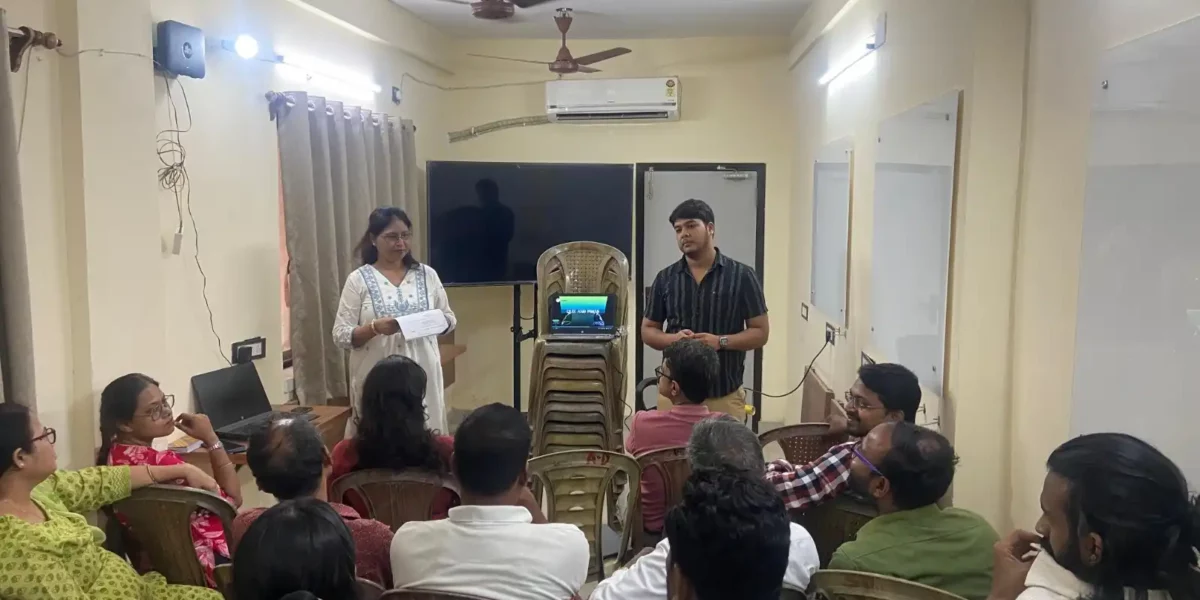
As technology becomes an integral part of our daily lives and workplaces, the importance of cyber security has never been greater. From online communication and digital banking to cloud storage and social media, the increasing use of digital platforms has created new opportunities—but also new risks. Recognizing the need to build awareness and preparedness among employees, Mukti Surya organized a Cyber Security Awareness Workshop on 30th May 2026 at the Mukti City Office.
The workshop brought together staff members from Mukti City Office and Herbarium for an engaging learning session focused on understanding cyber threats, promoting safe digital practices, and strengthening personal and organizational cyber resilience.
Why Cyber Security Awareness Matters
Cybercrime has emerged as one of the fastest-growing challenges in today’s digital world. Fraudulent emails, fake websites, phishing scams, identity theft, malware attacks, and social engineering tactics have become increasingly common, often targeting individuals who may be unaware of the risks.
For organizations working closely with communities, partners, donors, and beneficiaries, protecting sensitive information is not only a technical responsibility but also an ethical one. A single cyber incident can compromise personal data, disrupt operations, and undermine trust built over years of community engagement.
The workshop was therefore designed to equip participants with practical knowledge and skills that can help them identify threats early, respond appropriately, and adopt safer digital habits in both their professional and personal lives.
Interactive Learning Through Real-Life Examples
The session adopted a highly participatory approach, combining presentations, discussions, practical demonstrations, quizzes, and real-world case studies. Rather than focusing solely on technical concepts, the workshop emphasized everyday situations that employees may encounter while using email, mobile phones, social media platforms, digital payment systems, and workplace communication tools.
Participants learned how cybercriminals often exploit human behavior rather than technology itself. Through examples of phishing emails, fraudulent links, fake customer support messages, and impersonation scams, attendees gained a deeper understanding of how cyber attacks are carried out and how they can be prevented.
Key Topics Covered
The workshop covered a range of important cyber security topics, including:
- Recognizing phishing emails and suspicious messages
- Creating strong and secure passwords
- Safe use of social media platforms
- Protecting personal and organizational data
- Secure internet browsing practices
- Cyber fraud prevention techniques
- Digital identity protection
- Responsible online behavior
- Risks associated with public Wi-Fi networks
- Understanding digital exploitation and online manipulation
Participants were encouraged to share their own experiences and concerns, making the discussions highly relevant and relatable.
Creating a Culture of Digital Responsibility
One of the key messages of the workshop was that cyber security is not solely the responsibility of IT professionals. Every individual who uses digital devices plays an important role in maintaining a secure digital environment.
By adopting simple precautions such as verifying links before clicking, using strong passwords, enabling two-factor authentication, updating software regularly, and being cautious while sharing information online, individuals can significantly reduce their vulnerability to cyber threats.
The workshop also highlighted the importance of creating a workplace culture where employees remain vigilant, report suspicious activities, and continuously update their knowledge as cyber threats evolve.
Looking Ahead
As Mukti continues to expand its use of digital tools and technology-driven initiatives, building cyber awareness among employees remains a critical priority. Workshops such as these not only enhance digital literacy but also strengthen organizational resilience and preparedness in an increasingly connected world.
The Cyber Security Awareness Workshop concluded with enthusiastic participation from attendees and a shared commitment to practicing safer digital habits. The initiative marked another important step towards creating a secure, informed, and digitally responsible workplace where technology can be used confidently and responsibly for social impact.
In today’s digital age, cyber awareness is no longer optional—it is an essential life skill. Through continued learning and collective responsibility, organizations and individuals alike can contribute to building a safer digital future.
Project Activities
- A village for independent and enterprising women (A VIEW) (5)
- About Mukti (11)
- Accreditation (14)
- AGM (63)
- Agriculture Reforms (127)
- Ambulance Service (2)
- Amplifying Community Voices (72)
- Awards (17)
- Awareness and Empowerment (137)
- Awareness drives (61)
- Bio-Village-Kankandighi (10)
- Careers (9)
- Chick Rearing Programme for Marginalised Women (16)
- CHILD (25)
- Climate Resilience River Embankment (46)
- Covid-19 (74)
- Cultural Shows (7)
- Cyclone Aila (13)
- Cyclone Amphan (44)
- Cyclone Bulbul (30)
- Cyclone Dana (3)
- Cyclone Remal (12)
- Cyclone Response & Recovery (90)
- Cyclone Tolerant Houses (15)
- Cyclone Yaas (57)
- Daily Activities USA (25)
- Disaster Recovery (264)
- Editorial (66)
- Editorial by Abir Biswas (1)
- Editorial by Amit Kumar Dey (4)
- Editorial by Ananya Chatterjee (3)
- Editorial by Ankita Kothiyal (5)
- Editorial by Chandrachur Chatterjee (1)
- Editorial by Debabrata Halder (1)
- Editorial by Dr. Alokananda Ghosh Sengupta (2)
- Editorial by Kasturi Bakshi (1)
- Editorial by Monami Mitra (1)
- Editorial by Nandita (4)
- Editorial by Pampa Karmakar (1)
- Editorial by Pranay Patra (1)
- Editorial by Prof. Pradeep Ray (1)
- Editorial by Ranitendranath Tagore (1)
- Editorial by Sankar Halder (15)
- Editorial by Satyajit Ray (8)
- Editorial by Sohini Mehta (1)
- Editorial by Sonamon Basu (3)
- Editorial by Soumitra Bose (3)
- Editorial by Subhankar Basu (1)
- Editorial by Supriya Sarkar (1)
- Editorial by Supriyo Banerjee (4)
- Editorial by Ujjwal Maity (2)
- Education and Enrichment (455)
- Environment and Resilience (130)
- Featured Activities (31)
- Gram Clinic (9)
- Health Water & Sanitation (98)
- HOPE (10)
- Impact Stories List (109)
- Integrated Development (232)
- International Management Institute (IMI) (2)
- Jal hi Kal (6)
- Kitchen Gardening (16)
- Livelihood & Enablement (233)
- MCDF (121)
- Medical Camp (45)
- MIT (8)
- MKSS (57)
- MSS (156)
- Mukti Academia (5)
- Mukti Academy (2)
- Mukti BSI Digital Herberium (1)
- Mukti Craft (18)
- Mukti Cultural (2)
- Mukti Employment Exchange (MEE) (29)
- Mukti Fresh (15)
- Mukti Gram - Egra (11)
- Mukti Gram - Purbashridharpur (171)
- Mukti Green Defense in Sundarbans (11)
- Mukti URBAN (9)
- Mukti USA (2)
- Mukti Yoga (12)
- Mukto Dhara (2)
- Navya (2)
- NIRMAN (2)
- Northumbria University (2)
- Obituary (6)
- Observance Days Celebration (53)
- Organic Farming & Training Support (46)
- Pond Rejuvenation (21)
- Prerana (5)
- Projects For Mukti Wide (7)
- Queen Mary University of London (1)
- Rights and Special Needs (122)
- Run for Cause (13)
- Run4SafeFood (7)
- SDF (6)
- Shahoshini (11)
- Skill & Enterprise Development (21)
- Smart lab (5)
- Social Stock Exchange (2)
- Social Workers' Convention (1)
- Sundarbans Green (SUN-G) (15)
- Sunderban development fair project (4)
- Suraksha Songlap (1)
- Surya (22)
- Sustainable Agriculture Movement (64)
- SWAS-2-0 (21)
- Swastha Shongini (33)
- Swavalamban Accelerator in Sundarbans (SWAS) (21)
- Tour for Cause (52)
- TSS (216)
- UDAAN (9)
- Uncategorized (105)
- University of Calcutta (2)
- Value Education (12)
- Valued Partners (3)
- Vocational Trainings (15)
- VOICE (14)
- Voice Sunderban (2)