Strengthening Emotional Resilience: Shahoshini Case Team Receives Training on Trauma and Self-Care
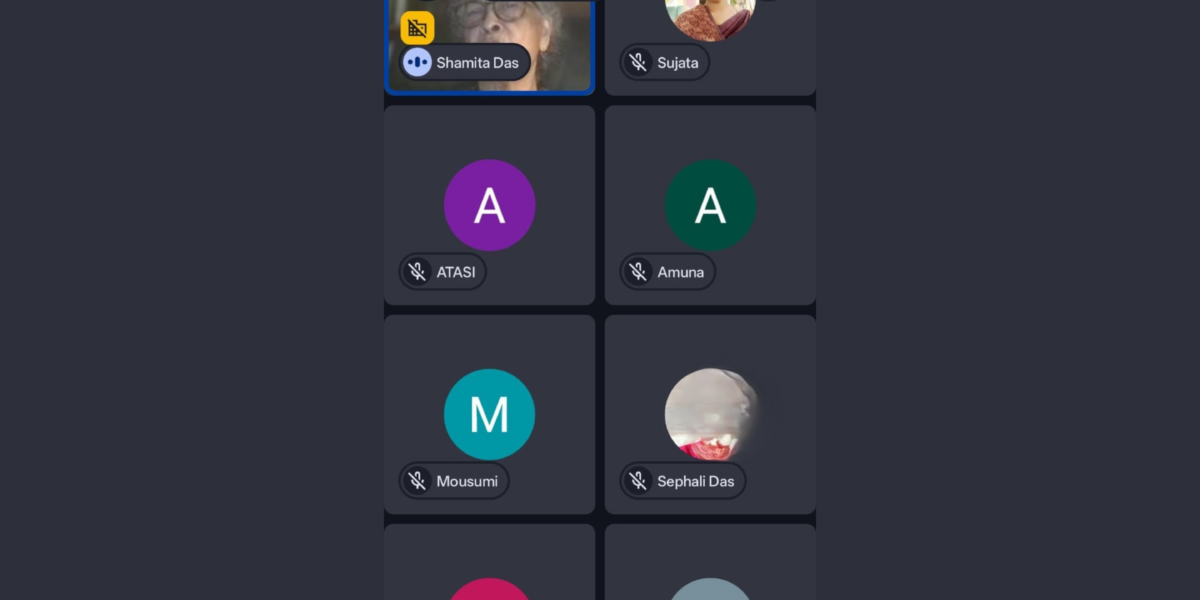
Recognising the emotional challenges faced by individuals who support people experiencing distress and difficult life situations, MUKTI organised a two-hour online training session on Trauma and Self-Care for the Shahoshini Case Team on 8 October 2026.
Facilitated by Ms. Shamita Das Gupta, the session focused on understanding trauma, recognising emotional triggers, and developing practical self-care strategies to help Case Team members maintain their emotional wellbeing while continuing to support others.
The training reinforced an important message: those who care for and support others must also prioritise their own wellbeing.
Understanding Trauma and Its Emotional Impact
The session began with an open discussion about the emotional experiences of Shahoshini Case Team members.
During their work, team members frequently listen to individuals sharing experiences of pain, suffering, and distress. While providing support is an essential part of their responsibilities, repeated exposure to difficult experiences can also affect their own emotional wellbeing.
Participants shared how such interactions sometimes leave them feeling stressed, saddened, or emotionally overwhelmed.
Ms. Das Gupta explained the concepts of trauma and emotional triggers, highlighting how distressing experiences can influence a person’s thoughts, feelings, behaviour, and everyday life.
The discussion helped participants better understand their own emotional responses and recognise the importance of addressing these feelings rather than overlooking them.
Building Emotional Strength Through Self-Care
A major focus of the training was identifying simple, practical ways to manage emotional stress and maintain a healthy balance between professional responsibilities and personal wellbeing.
Ms. Das Gupta introduced several self-care practices that participants could incorporate into their daily routines.
One key recommendation was the formation of peer-support groups consisting of seven members, creating a safe and supportive space where team members could share experiences, discuss challenges, and encourage one another.
The session also highlighted the importance of building friendships and social connections outside work, allowing individuals to maintain supportive relationships beyond their professional responsibilities.
Other suggested practices included yoga, breathing exercises, and creative activities that could provide opportunities for relaxation and emotional expression.
Participants were also encouraged to maintain a personal diary, recording daily experiences, challenges, positive moments, and achievements. This reflective practice was introduced as a way to recognise emotional patterns, acknowledge personal progress, and develop greater self-awareness.
Learning Grounding Techniques to Manage Emotional Distress
An important practical component of the session was the introduction of a grounding technique to help participants manage moments of emotional distress.
Ms. Das Gupta demonstrated how focusing attention on the immediate surroundings through sight, hearing, and touch can help individuals reconnect with the present moment when experiencing overwhelming emotions.
The exercise offered participants a simple technique that could be practised independently during stressful situations.
By introducing accessible methods of emotional regulation, the training aimed to strengthen participants’ confidence in managing their own wellbeing while responding sensitively to the experiences of others.
Creating a Culture of Peer Support and Emotional Wellbeing
Throughout the session, the importance of mutual understanding, emotional awareness, and collective support remained central to the discussions.
The training encouraged Shahoshini Case Team members to recognise that experiencing emotional stress while supporting others is a response that deserves attention and care.
It also emphasised that self-care is not separate from their responsibilities but an essential part of sustaining their ability to provide meaningful support.
By promoting peer-support networks and practical wellbeing strategies, the initiative sought to encourage a healthier and more supportive working environment for Case Team members.
Supporting Those Who Support Others
The training reflected MUKTI Shahoshini’s commitment to strengthening the capacity and emotional resilience of its Case Team, recognising that effective community support requires both professional understanding and personal wellbeing.
Through discussions on trauma, emotional triggers, grounding techniques, and self-care, participants gained practical approaches to managing the emotional demands of their work.
The session reinforced that caring for oneself is an essential part of caring for others. By prioritising emotional wellbeing and peer support, Shahoshini Case Team members can continue their responsibilities with greater resilience, sensitivity, and sustainability.
Project Activities
- A village for independent and enterprising women (A VIEW) (5)
- About Mukti (11)
- Accreditation (14)
- AGM (63)
- Agriculture Reforms (130)
- Ambulance Service (2)
- Amplifying Community Voices (78)
- Awards (17)
- Awareness and Empowerment (141)
- Awareness drives (64)
- Bio-Village-Kankandighi (10)
- Careers (10)
- Chick Rearing Programme for Marginalised Women (17)
- CHILD (25)
- Climate Resilience River Embankment (46)
- Covid-19 (74)
- Cultural Shows (7)
- Cyclone Aila (13)
- Cyclone Amphan (44)
- Cyclone Bulbul (30)
- Cyclone Dana (3)
- Cyclone Remal (12)
- Cyclone Response & Recovery (90)
- Cyclone Tolerant Houses (15)
- Cyclone Yaas (57)
- Daily Activities USA (25)
- Disaster Recovery (265)
- Editorial (74)
- Editorial by Abir Biswas (1)
- Editorial by Amit Kumar Dey (4)
- Editorial by Ananya Chatterjee (3)
- Editorial by Ankita Kothiyal (6)
- Editorial by Chandrachur Chatterjee (1)
- Editorial by Debabrata Halder (2)
- Editorial by Dr. Alokananda Ghosh Sengupta (2)
- Editorial by Kasturi Bakshi (1)
- Editorial by Monami Mitra (1)
- Editorial by Nandita (4)
- Editorial by Pampa Karmakar (1)
- Editorial by Paramita Panja (1)
- Editorial by Pranay Patra (1)
- Editorial by Prof. Pradeep Ray (1)
- Editorial by Ranitendranath Tagore (2)
- Editorial by Sankar Halder (16)
- Editorial by Satyajit Ray (11)
- Editorial by Sohini Mehta (1)
- Editorial by Sonamon Basu (3)
- Editorial by Soumitra Bose (4)
- Editorial by Subhankar Basu (1)
- Editorial by Supriya Sarkar (1)
- Editorial by Supriyo Banerjee (4)
- Editorial by Ujjwal Maity (2)
- Education and Enrichment (472)
- Environment and Resilience (132)
- Featured Activities (32)
- Gram Clinic (9)
- Health Water & Sanitation (103)
- HOPE (10)
- Impact Stories List (109)
- Integrated Development (248)
- International Management Institute (IMI) (2)
- Jal hi Kal (6)
- KF Mukti Clinic (2)
- Kitchen Gardening (16)
- Livelihood & Enablement (242)
- MCDF (122)
- Medical Camp (48)
- MIT (8)
- MKSS (63)
- MSS (161)
- Mukti Academia (5)
- Mukti Academy (2)
- Mukti BSI Digital Herberium (1)
- Mukti Craft (18)
- Mukti Cultural (2)
- Mukti Employment Exchange (MEE) (29)
- Mukti Fresh (15)
- Mukti Gram - Egra (12)
- Mukti Gram - Purbashridharpur (172)
- Mukti Green Defense in Sundarbans (12)
- Mukti URBAN (19)
- Mukti USA (2)
- Mukti Yoga (12)
- Mukto Dhara (2)
- Navya (3)
- NIRMAN (5)
- Northumbria University (2)
- Obituary (6)
- Observance Days Celebration (54)
- Organic Farming & Training Support (49)
- Pond Rejuvenation (21)
- Prerana (5)
- Projects For Mukti Wide (7)
- Queen Mary University of London (1)
- Rights and Special Needs (134)
- Run for Cause (16)
- Run4SafeFood (11)
- SDF (6)
- Shahoshini (16)
- Skill & Enterprise Development (21)
- Smart lab (5)
- Social Stock Exchange (2)
- Social Workers' Convention (1)
- Sundarbans Green (SUN-G) (15)
- Sunderban development fair project (4)
- Suraksha Songlap (3)
- Surya (29)
- Sustainable Agriculture Movement (67)
- SWAS-2-0 (23)
- Swastha Shongini (33)
- Swavalamban Accelerator in Sundarbans (SWAS) (22)
- Tour for Cause (52)
- TSS (222)
- UDAAN (9)
- Uncategorized (109)
- University of Calcutta (2)
- Value Education (13)
- Valued Partners (3)
- Vocational Trainings (15)
- VOICE (15)
- Voice Sunderban (2)