A New Beginning in Moynaguri: Promise and Possibility in Rural North Bengal
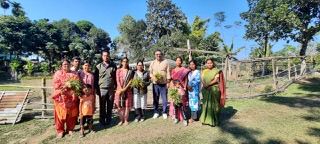
At Mukti, every new centre represents far more than a physical space. It represents an opportunity for young minds, families and communities to build a pathway toward a better future. A recent field visit to Lataguri in the Moynaguri region of Jalpaiguri district offered a glimpse into both the promise and the challenges that define rural North Bengal today.
Surrounded by expansive rice fields, tea gardens and the gentle flow of the Teesta River, the region presents a picture of natural beauty. Yet beneath this landscape lies a deeper reality – communities striving to overcome gaps in education, livelihood opportunities and social support. It is within this setting that Mukti has begun its first initiatives in the region, bringing education, livelihood support and community development together through the NIRMAN programme.
Key Impact Snapshot
- Nearly 200 students engaged through the NIRMAN integrated learning programme
- 88 students enrolled in MKSS (Mukti Kishalaya Support School) centres
- 43 students currently supported through MSS (Mukti Support School)
- Programme designed to support about 500 marginalized women through Self‑Help Groups
- Livelihood support through backyard poultry, horticulture and sustainable agriculture
- Financial literacy and entrepreneurship training for rural women
- Community‑based education support for children of beneficiary families.
A Centre Full of Potential
The NIRMAN–Lataguri initiative is already buzzing with youthful energy and aspiration. Though still in its early stages, the centre has quickly become a focal point for learning and community engagement for students from surrounding villages.
The current programmes bring together academic support, community engagement and livelihood awareness, ensuring that education is linked closely with the realities of rural life.
Integrating Education with Livelihood and Nutrition
The NIRMAN programme (Nutrition Integrated Rural Management for Agriculture and Nurturing) has been designed as a community‑driven initiative to strengthen both livelihoods and social development across villages in Kranti Block.
The programme focuses particularly on empowering women from marginalized households by organizing them into Self‑Help Groups and equipping them with sustainable livelihood opportunities such as backyard poultry rearing, homestead horticulture and organic farming practices. These activities not only create supplementary income but also improve household nutrition and food security.
Alongside livelihood development, the programme emphasizes financial literacy, entrepreneurship awareness and community participation. Local women are also being encouraged to take leadership roles within the programme, including supporting community education initiatives for children.
Life Beyond the Classroom
Moynaguri and neighbouring villages are largely agricultural communities. Most families depend on rice cultivation or work in nearby tea gardens. While livelihoods have improved gradually for some households through hard work and perseverance, challenges in education, health awareness and livelihood stability remain significant.
Mukti’s approach therefore integrates learning with practical exposure to agriculture, sustainable farming practices and community awareness, ensuring that education remains relevant to the lives of rural families.
Community Participation
Community participation remains central to Mukti’s development philosophy. Plans are underway to form a local Gram Committee to strengthen engagement between Mukti and the villagers. This will help ensure transparency, accountability and long‑term sustainability of the centre.
Looking Ahead with Hope
What stands out most in Moynaguri is the extraordinary enthusiasm of its students and the willingness of families to embrace education as a pathway to a better future.
With stronger community participation, livelihood initiatives for women and continued support for students, the Mukti centre in Moynaguri has the potential to become a powerful catalyst for change.
This is only the beginning. With collective effort and sustained engagement, Moynaguri can emerge as one of Mukti’s most inspiring stories of grassroots transformation.
Soumitra Bose
Vice-President, Lead – Finance, Compliance & Fund Raising, MUKTI
Project Activities
- A village for independent and enterprising women (A VIEW) (5)
- About Mukti (4)
- Accreditation (14)
- AGM (63)
- Agriculture Reforms (125)
- Ambulance Service (2)
- Amplifying Community Voices (67)
- Awards (15)
- Awareness and Empowerment (137)
- Awareness drives (61)
- Bio-Village-Kankandighi (10)
- Careers (14)
- Chick Rearing Programme for Marginalised Women (16)
- CHILD (25)
- Climate Resilience River Embankment (46)
- Covid-19 (74)
- Cultural Shows (7)
- Cyclone Aila (13)
- Cyclone Amphan (44)
- Cyclone Bulbul (30)
- Cyclone Dana (3)
- Cyclone Remal (12)
- Cyclone Response & Recovery (90)
- Cyclone Tolerant Houses (15)
- Cyclone Yaas (57)
- Disaster Recovery (264)
- Editorial (66)
- Editorial by Abir Biswas (1)
- Editorial by Amit Kumar Dey (4)
- Editorial by Ananya Chatterjee (3)
- Editorial by Ankita Kothiyal (5)
- Editorial by Chandrachur Chatterjee (1)
- Editorial by Debabrata Halder (1)
- Editorial by Dr. Alokananda Ghosh Sengupta (2)
- Editorial by Kasturi Bakshi (1)
- Editorial by Monami Mitra (1)
- Editorial by Nandita (4)
- Editorial by Pampa Karmakar (1)
- Editorial by Pranay Patra (1)
- Editorial by Prof. Pradeep Ray (1)
- Editorial by Ranitendranath Tagore (1)
- Editorial by Sankar Halder (15)
- Editorial by Satyajit Ray (8)
- Editorial by Sohini Mehta (1)
- Editorial by Sonamon Basu (3)
- Editorial by Soumitra Bose (3)
- Editorial by Subhankar Basu (1)
- Editorial by Supriya Sarkar (1)
- Editorial by Supriyo Banerjee (4)
- Editorial by Ujjwal Maity (2)
- Education and Enrichment (426)
- Environment and Resilience (127)
- Featured Activities (24)
- Gram Clinic (9)
- Health Water & Sanitation (97)
- HOPE (10)
- Impact Stories List (109)
- Integrated Development (222)
- International Management Institute (IMI) (2)
- Jal hi Kal (6)
- Kitchen Gardening (16)
- Livelihood & Enablement (222)
- MCDF (121)
- Medical Camp (45)
- MIT (8)
- MKSS (51)
- MSS (149)
- Mukti Academia (5)
- Mukti Academy (2)
- Mukti Craft (18)
- Mukti Cultural (2)
- Mukti Employment Exchange (MEE) (9)
- Mukti Fresh (15)
- Mukti Gram - Egra (11)
- Mukti Gram - Purbashridharpur (170)
- Mukti Green Defense in Sundarbans (11)
- Mukti Yoga (12)
- Mukto Dhara (2)
- Northumbria University (2)
- Obituary (6)
- Observance Days Celebration (53)
- Organic Farming & Training Support (45)
- Pond Rejuvenation (20)
- Prerana (1)
- Prerna (4)
- Projects For Mukti Wide (7)
- Queen Mary University of London (1)
- Rights and Special Needs (113)
- Run for Cause (13)
- Run4SafeFood (7)
- SDF (6)
- Shahoshini (9)
- Skill & Enterprise Development (21)
- Smart lab (5)
- Social Stock Exchange (2)
- Social Workers' Convention (1)
- Sundarbans Green (SUN-G) (15)
- Sunderban development fair project (4)
- Surya (15)
- Sustainable Agriculture Movement (64)
- SWAS-2-0 (20)
- Swastha Shongini (33)
- Swavalamban Accelerator in Sundarbans (SWAS) (21)
- Tour for Cause (45)
- TSS (201)
- UDAAN (8)
- Uncategorized (101)
- University of Calcutta (1)
- Value Education (12)
- Valued Partners (3)
- Vocational Trainings (15)
- VOICE (14)