Stronger Together: Women-Led Cooperatives Building Collective Power through SWAS
Under MUKTI’s SWAS Initiative, women-led cooperatives are not only creating livelihood opportunities—they are also building institutions that give women a stronger collective voice.
As the cooperatives grow, the need for closer coordination, shared learning, and joint decision-making becomes increasingly important. To support this, MUKTI is facilitating the formation of federations, bringing together representatives from different cooperatives on a common platform. These federations enable women to discuss challenges together, learn from one another, plan collective activities, and explore opportunities that may be difficult for an individual cooperative to pursue alone.
A New Federation Takes Shape at Kan Kan
On 2 August 2026, an important step was taken at the Kan Kan Branch, where representatives from the Konkan Dighi, Raidighi, and Ghoradal cooperatives came together to form a larger federation.
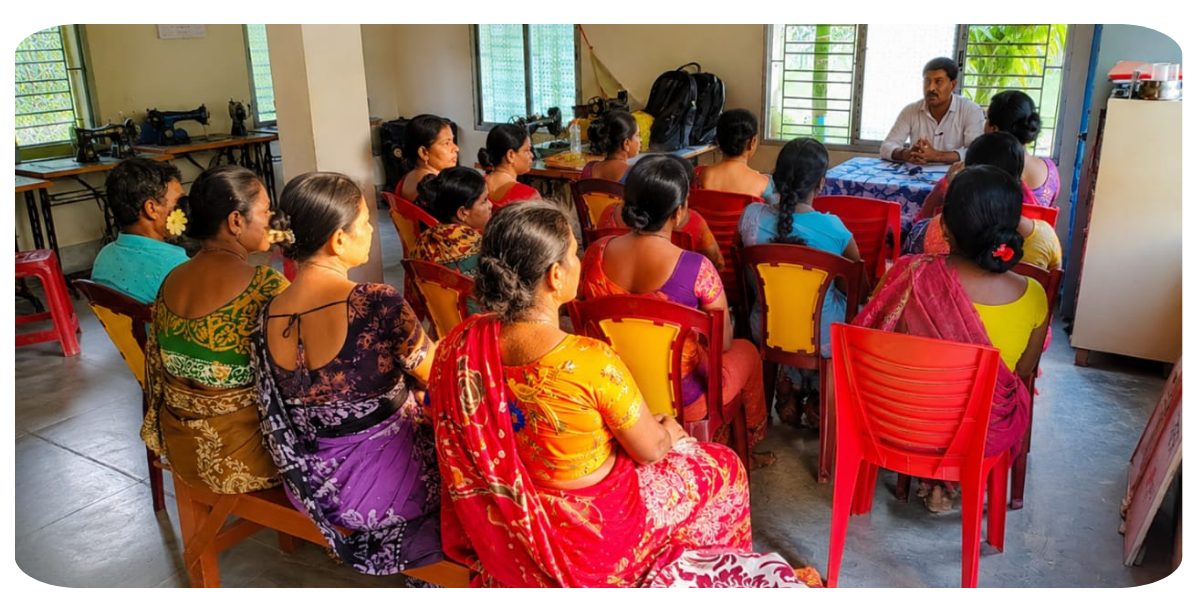
The meeting was more than a formal process. It created a space where women from different cooperatives could share their experiences, speak about the challenges they face, and contribute their ideas for the future.
By coming together, the cooperatives can now work more closely on common priorities, exchange good practices, solve problems collectively, and explore stronger market and livelihood opportunities. The federation is expected to strengthen not only the functioning of individual cooperatives but also the confidence and collective leadership of their members.
Deulbari Women Prepare for the Next Step
At the Deulbari Branch, meanwhile, preparations are progressing towards the formal registration and strengthening of the cooperative. The necessary documents have been collected and organised to support the registration process.
On 7 August 2026, women members came together for a discussion on the proposed federation and what it could mean for them.
The conversation focused on a simple but powerful idea: women can achieve more when they work together.
Members discussed how a federation could help them make collective decisions, take greater responsibility, address common challenges, and strengthen their economic and social position. They also learned about the registration process, their future roles and responsibilities, and how a federation would function.
Most importantly, the women were encouraged to share their own expectations, suggestions, and ideas. This participation is helping ensure that the federation is not merely an organisational structure, but a platform shaped and owned by the women themselves.
Through initiatives like these, SWAS is helping women-led cooperatives move from individual enterprises towards stronger collective institutions—building greater confidence, leadership, solidarity, and opportunities for sustainable growth.
Project Activities
- A village for independent and enterprising women (A VIEW) (5)
- About Mukti (11)
- Accreditation (14)
- AGM (63)
- Agriculture Reforms (127)
- Ambulance Service (2)
- Amplifying Community Voices (75)
- Awards (17)
- Awareness and Empowerment (138)
- Awareness drives (61)
- Bio-Village-Kankandighi (10)
- Careers (10)
- Chick Rearing Programme for Marginalised Women (16)
- CHILD (25)
- Climate Resilience River Embankment (46)
- Covid-19 (74)
- Cultural Shows (7)
- Cyclone Aila (13)
- Cyclone Amphan (44)
- Cyclone Bulbul (30)
- Cyclone Dana (3)
- Cyclone Remal (12)
- Cyclone Response & Recovery (90)
- Cyclone Tolerant Houses (15)
- Cyclone Yaas (57)
- Daily Activities USA (25)
- Disaster Recovery (265)
- Editorial (69)
- Editorial by Abir Biswas (1)
- Editorial by Amit Kumar Dey (4)
- Editorial by Ananya Chatterjee (3)
- Editorial by Ankita Kothiyal (5)
- Editorial by Chandrachur Chatterjee (1)
- Editorial by Debabrata Halder (1)
- Editorial by Dr. Alokananda Ghosh Sengupta (2)
- Editorial by Kasturi Bakshi (1)
- Editorial by Monami Mitra (1)
- Editorial by Nandita (4)
- Editorial by Pampa Karmakar (1)
- Editorial by Paramita Panja (1)
- Editorial by Pranay Patra (1)
- Editorial by Prof. Pradeep Ray (1)
- Editorial by Ranitendranath Tagore (1)
- Editorial by Sankar Halder (16)
- Editorial by Satyajit Ray (10)
- Editorial by Sohini Mehta (1)
- Editorial by Sonamon Basu (3)
- Editorial by Soumitra Bose (3)
- Editorial by Subhankar Basu (1)
- Editorial by Supriya Sarkar (1)
- Editorial by Supriyo Banerjee (4)
- Editorial by Ujjwal Maity (2)
- Education and Enrichment (460)
- Environment and Resilience (132)
- Featured Activities (32)
- Gram Clinic (9)
- Health Water & Sanitation (101)
- HOPE (10)
- Impact Stories List (109)
- Integrated Development (239)
- International Management Institute (IMI) (2)
- Jal hi Kal (6)
- KF Mukti Clinic (2)
- Kitchen Gardening (16)
- Livelihood & Enablement (236)
- MCDF (122)
- Medical Camp (46)
- MIT (8)
- MKSS (59)
- MSS (157)
- Mukti Academia (5)
- Mukti Academy (2)
- Mukti BSI Digital Herberium (1)
- Mukti Craft (18)
- Mukti Cultural (2)
- Mukti Employment Exchange (MEE) (29)
- Mukti Fresh (15)
- Mukti Gram - Egra (12)
- Mukti Gram - Purbashridharpur (172)
- Mukti Green Defense in Sundarbans (12)
- Mukti URBAN (13)
- Mukti USA (2)
- Mukti Yoga (12)
- Mukto Dhara (2)
- Navya (2)
- NIRMAN (4)
- Northumbria University (2)
- Obituary (6)
- Observance Days Celebration (54)
- Organic Farming & Training Support (46)
- Pond Rejuvenation (21)
- Prerana (5)
- Projects For Mukti Wide (7)
- Queen Mary University of London (1)
- Rights and Special Needs (128)
- Run for Cause (14)
- Run4SafeFood (9)
- SDF (6)
- Shahoshini (14)
- Skill & Enterprise Development (21)
- Smart lab (5)
- Social Stock Exchange (2)
- Social Workers' Convention (1)
- Sundarbans Green (SUN-G) (15)
- Sunderban development fair project (4)
- Suraksha Songlap (1)
- Surya (24)
- Sustainable Agriculture Movement (64)
- SWAS-2-0 (22)
- Swastha Shongini (33)
- Swavalamban Accelerator in Sundarbans (SWAS) (22)
- Tour for Cause (52)
- TSS (219)
- UDAAN (9)
- Uncategorized (107)
- University of Calcutta (2)
- Value Education (12)
- Valued Partners (3)
- Vocational Trainings (15)
- VOICE (14)
- Voice Sunderban (2)