Not Loans, but Capital for Liberation: Rethinking Poverty Alleviation
Poverty is not merely lack of money. It is a lack of opportunities, security, and the freedom to make choices.
When a poor person falls ill, healthcare is not just a medical concern—it becomes an economic crisis. When it is time to pay for a child’s education, it is not simply about schooling but a struggle for the future. And when an opportunity arises to start a small business, the absence of capital often forces them back to where they started.
As a society, we frequently say that people should become self-reliant. But the question is: who provides the first step towards self-reliance?
Today, almost every Indian has access to a bank account. Through Jan Dhan accounts and other financial inclusion initiatives, millions have become part of the formal economy. Even people living in poverty save small amounts of money, conduct banking transactions, and contribute to the nation’s economic activity.
Yet, when these same individuals need capital to improve their lives, the banking system often does not trust them.
Banks assess borrowers primarily on their repayment capacity. Those with stable incomes, assets, collateral, and mortgageable property receive loans. In other words, those who already possess financial security have access to credit, while those who need capital the most often find the doors closed.
This represents one of the deepest ethical contradictions within our financial system.
If poverty is to be eliminated, capital must reach those who have none. However, the current banking system largely provides capital only to those who can already prove their ability to repay. While the banking sector speaks of financial inclusion, it often fails to accommodate the realities, risks, urgent needs, and untapped potential of poor communities.
It is within this gap that microcredit emerged.
The logic behind microcredit is straightforward: banks do not lend to the poor, while informal moneylenders charge exploitative interest rates, so microcredit offers an alternative. There is truth in this argument. In many cases, microcredit has helped poor families escape the harsh exploitation of traditional moneylenders.
But the discussion does not end there.
If a poor person must borrow at interest rates of 24%, 30%, 36%, or even higher in practice, how can they realistically escape poverty? Those with wealth receive cheaper credit, while those with nothing pay the highest price. Can poverty truly be eliminated through such an inverted system of justice?
Receiving a loan does not automatically make someone an entrepreneur. Access to money alone does not build a successful business. Entrepreneurship requires market knowledge, financial management skills, risk-taking ability, decision-making capacity, and the willingness to learn from failure. Even highly educated individuals often hesitate before starting a business. Expecting a rural woman or a person with limited education to become self-reliant simply by providing a small loan is often more of a slogan than a practical solution.
This is the fundamental limitation of microcredit. It provides loans but does not always build capability. It collects repayments but does not always increase incomes. It may serve as an alternative to moneylenders, but it is not a complete solution to poverty.
More importantly, when the high interest paid by poor families ultimately becomes someone else’s profit, the model turns into an extraction model. Wealth flows out of communities through the labour, vulnerability, and financial struggles of poor people. Instead of becoming a source of liberation, capital becomes another burden.
It is time to rethink our approach.
Poverty alleviation requires more than credit; it requires social capital. It requires capital that is not designed to profit from the poor, but to help them stand on their own feet. It requires a system where finance is viewed as humanitarian support, a social responsibility, and a means of creating opportunities.
It is from this philosophy that the Mukti Community Development Fund (MCDF) was born.
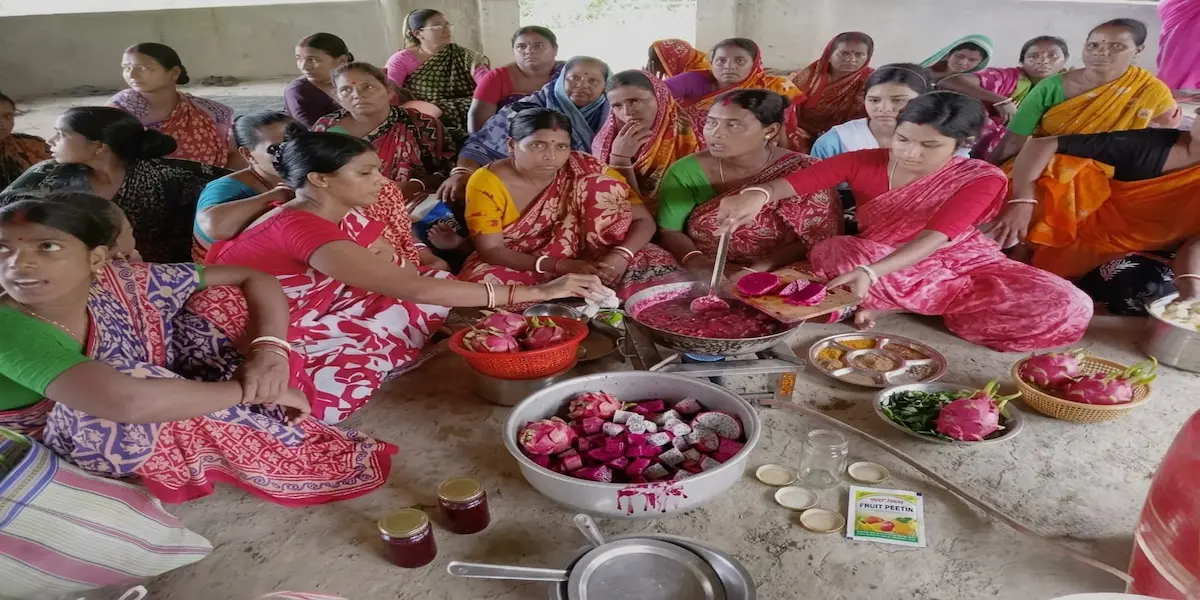
MCDF views capital not as a market commodity, but as a social responsibility. Community-contributed social capital reaches poor women through interest-free loans or loans carrying only a minimal management cost. The objective is not profit, but to meet people’s needs while strengthening their capabilities and preserving their dignity.
The model is built upon three important pillars.
The first is keeping the cost of capital as low as possible. Poverty cannot be eliminated by charging high interest to those who are already struggling. Therefore, loans are either interest-free or structured only to recover the minimum operational costs required to sustain the programme.
The second pillar is that MCDF is not merely a lending mechanism—it is an institution-building process. Women organize themselves into self-help groups and autonomous community institutions. They are not simply borrowers; they become stakeholders in the system itself. This sense of ownership strengthens their confidence and collective responsibility.
The third pillar is the emphasis on training and a federated community structure. Financial support is accompanied by capacity building, leadership development, decision-making skills, and continuous mentoring. Small groups are connected through larger community institutions, enabling women to grow not only as beneficiaries but as leaders capable of transforming their families, groups, and communities.
This is why the Mukti MCDF model represents an important social innovation. It demonstrates that when capital reaches poor communities at a minimal cost, through organized institutions, continuous training, and with dignity at its core, finance becomes a tool for development rather than exploitation.
Ultimately, the question extends beyond economics.
How do we view people living in poverty?
Do we see them as risks or as individuals with potential?
Do we push them into high-interest credit markets, or do we provide them access to social capital?
Do we treat them merely as borrowers, or do we empower them to become confident decision-makers?
The future of poverty alleviation depends on how we answer these questions.
Banking systems remain essential, and microcredit certainly has an important role to play. But neither, by itself, is sufficient. What is needed is a more humane economic system—one where capital is used not simply to increase the wealth of those who already have it, but to expand the freedom, dignity, and opportunities of those who have been left behind.
What we need is not more debt, but capital for liberation.
Not charity, but dignity.
Not merely repayment, but genuine empowerment.
The Mukti Community Development Fund (MCDF) stands as a practical, tested, and hopeful example of this alternative approach.
Learn more about the Mukti Community Development Fund (MCDF):
https://muktiweb.org/livelihood-enablement/mukti-community-development-fund/
Project Activities
- A village for independent and enterprising women (A VIEW) (5)
- About Mukti (11)
- Accreditation (14)
- AGM (63)
- Agriculture Reforms (130)
- Ambulance Service (2)
- Amplifying Community Voices (77)
- Awards (17)
- Awareness and Empowerment (141)
- Awareness drives (64)
- Bio-Village-Kankandighi (10)
- Careers (10)
- Chick Rearing Programme for Marginalised Women (17)
- CHILD (25)
- Climate Resilience River Embankment (46)
- Covid-19 (74)
- Cultural Shows (7)
- Cyclone Aila (13)
- Cyclone Amphan (44)
- Cyclone Bulbul (30)
- Cyclone Dana (3)
- Cyclone Remal (12)
- Cyclone Response & Recovery (90)
- Cyclone Tolerant Houses (15)
- Cyclone Yaas (57)
- Daily Activities USA (25)
- Disaster Recovery (265)
- Editorial (73)
- Editorial by Abir Biswas (1)
- Editorial by Amit Kumar Dey (4)
- Editorial by Ananya Chatterjee (3)
- Editorial by Ankita Kothiyal (5)
- Editorial by Chandrachur Chatterjee (1)
- Editorial by Debabrata Halder (2)
- Editorial by Dr. Alokananda Ghosh Sengupta (2)
- Editorial by Kasturi Bakshi (1)
- Editorial by Monami Mitra (1)
- Editorial by Nandita (4)
- Editorial by Pampa Karmakar (1)
- Editorial by Paramita Panja (1)
- Editorial by Pranay Patra (1)
- Editorial by Prof. Pradeep Ray (1)
- Editorial by Ranitendranath Tagore (2)
- Editorial by Sankar Halder (16)
- Editorial by Satyajit Ray (11)
- Editorial by Sohini Mehta (1)
- Editorial by Sonamon Basu (3)
- Editorial by Soumitra Bose (4)
- Editorial by Subhankar Basu (1)
- Editorial by Supriya Sarkar (1)
- Editorial by Supriyo Banerjee (4)
- Editorial by Ujjwal Maity (2)
- Education and Enrichment (470)
- Environment and Resilience (132)
- Featured Activities (32)
- Gram Clinic (9)
- Health Water & Sanitation (103)
- HOPE (10)
- Impact Stories List (109)
- Integrated Development (247)
- International Management Institute (IMI) (2)
- Jal hi Kal (6)
- KF Mukti Clinic (2)
- Kitchen Gardening (16)
- Livelihood & Enablement (241)
- MCDF (122)
- Medical Camp (48)
- MIT (8)
- MKSS (61)
- MSS (161)
- Mukti Academia (5)
- Mukti Academy (2)
- Mukti BSI Digital Herberium (1)
- Mukti Craft (18)
- Mukti Cultural (2)
- Mukti Employment Exchange (MEE) (29)
- Mukti Fresh (15)
- Mukti Gram - Egra (12)
- Mukti Gram - Purbashridharpur (172)
- Mukti Green Defense in Sundarbans (12)
- Mukti URBAN (18)
- Mukti USA (2)
- Mukti Yoga (12)
- Mukto Dhara (2)
- Navya (3)
- NIRMAN (5)
- Northumbria University (2)
- Obituary (6)
- Observance Days Celebration (54)
- Organic Farming & Training Support (49)
- Pond Rejuvenation (21)
- Prerana (5)
- Projects For Mukti Wide (7)
- Queen Mary University of London (1)
- Rights and Special Needs (132)
- Run for Cause (16)
- Run4SafeFood (11)
- SDF (6)
- Shahoshini (15)
- Skill & Enterprise Development (21)
- Smart lab (5)
- Social Stock Exchange (2)
- Social Workers' Convention (1)
- Sundarbans Green (SUN-G) (15)
- Sunderban development fair project (4)
- Suraksha Songlap (3)
- Surya (28)
- Sustainable Agriculture Movement (67)
- SWAS-2-0 (23)
- Swastha Shongini (33)
- Swavalamban Accelerator in Sundarbans (SWAS) (22)
- Tour for Cause (52)
- TSS (222)
- UDAAN (9)
- Uncategorized (109)
- University of Calcutta (2)
- Value Education (12)
- Valued Partners (3)
- Vocational Trainings (15)
- VOICE (15)
- Voice Sunderban (2)